Positioning
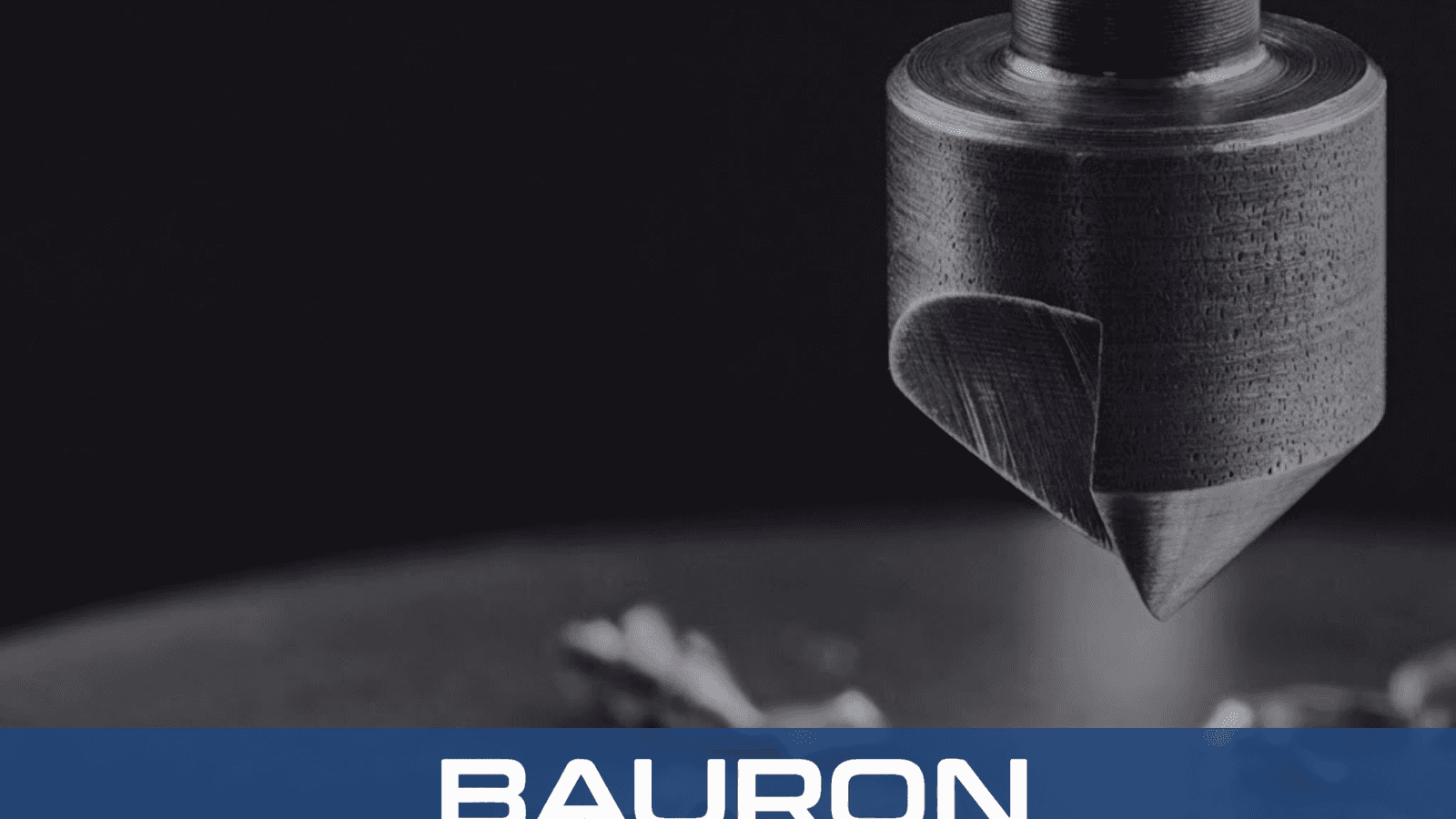
The short, thick body resists deflection as the tool approaches the material.

Center drill bits are exceptionally rigid hole-starting tools designed to establish an accurate center point on a workpiece. Often referred to as a center drill tool, they prevent longer drills from wandering, ensuring perfect alignment. Highly utilized as a lathe center drill, these tools create a 60-degree countersink that perfectly mates with a tailstock live center.
The short, thick body resists deflection as the tool approaches the material.
A small pilot tip engages first, establishing an absolutely true center.
The angled flutes follow, cutting a conical profile into the bore.
The tool is withdrawn, leaving a perfectly centered starting point for larger drills.
Maximizes rigidity, making it the perfect drill bit to make holes exactly where intended.
Eliminates the need for two separate tools, saving setup time.
Matches standard machine centers for secure, vibration-free workpiece holding.
Doubles the lifespan of every single center drill bit.
Bites instantly into the material to prevent drill wandering.
Reduces vibration and deflection during the initial cut.
| Specification | Range / Details |
|---|---|
| Size Numbers | #1 through #8 (Standard industry sizes) |
| Included Angle | 60° standard (Custom angles available) |
| Shank Type | Straight cylindrical |
| Tool Format | Double-ended body |
| Available As | Individual sizes or a complete center drill bit set |
| Tolerance | Precision ground to exact OEM specifications |
| Material / Coating | Best For | Key Advantage |
|---|---|---|
| HSS (High-Speed Steel) | Mild steel, aluminum, and general lathe spotting. | Economical and tough enough for standard machine shop operations. |
| Cobalt (HSS-Co) | Harder alloys and abrasive cast irons. | High heat resistance and superior edge retention during continuous use. |
| TiN Coating | High-volume production lines. | Adds surface lubricity and wear resistance to extend tool life significantly. |
HSS provides toughness and economy for standard spotting, cobalt improves heat resistance and edge retention in harder alloys, and TiN adds lubricity and wear resistance for production use.
Used in the tailstock to drill secure holding points on the ends of rotating stock.
Utilized for automated spotting and countersinking on cylindrical parts.
Deployed to spot holes accurately on flat surfaces before using longer twist drills.
Machines a precise center drill hole at the end of a workpiece to securely support it with a tailstock center.
Acts as highly rigid precision drill bits to start holes on flat or curved surfaces without bit walking.
Creates a perfectly angled chamfer for screw heads or subsequent tooling alignment.
Bores perfectly aligned holding points on both ends of rotating cylindrical components.
Standard hole drill bits have long, flexible flutes that can easily wander or deflect when starting a hole on a hard or curved surface. A center drill bit has an extremely short, thick body that provides the rigidity necessary to start a hole with absolute positional accuracy.
No, it is not a deep hole cutting drill bit. The pilot tip is very short and the flutes do not have the capacity to clear chips from deep cavities. It is strictly a spotting and countersinking tool designed to prepare the workpiece for standard twist drills.
Most cutting tools center drills are manufactured with a cutting point on both ends of the shank. If one end becomes dull or breaks, the machinist can simply flip the tool around in the chuck and continue working, effectively giving you two tools in one.
A typical center drill bit set usually includes sizes #1 through #5. This covers pilot diameters ranging from 3/64 inch up to 3/16 inch, providing the necessary variety for spotting most standard lathe and milling projects.
Bauron can review requirements for center drills with 82-degree or 90-degree countersink angles to match specific fasteners or unique blueprint requirements, in addition to the standard 60-degree angle used with lathe centers.
Bauron provides design and engineering support for application-specific tooling requirements. Share the geometry, material, coating needs, and machining challenge for technical review.
Talk to Engineering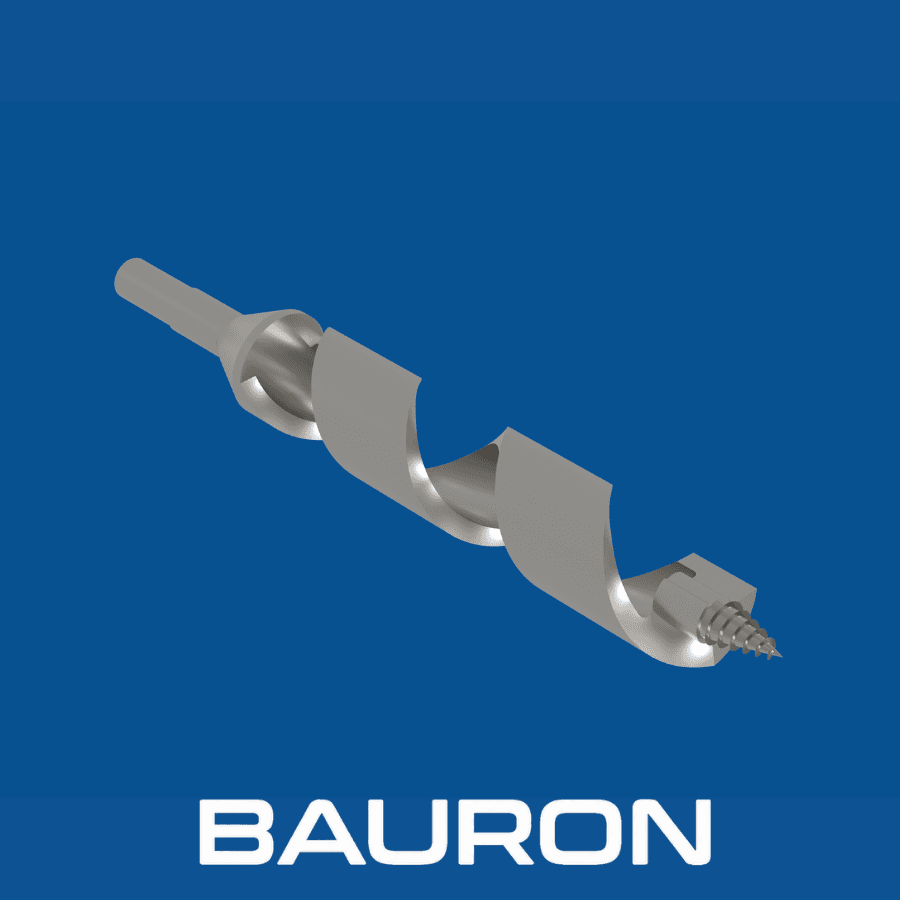
Auger drill bits are specialized, deep-hole cutting tools featuring a screw tip and wide flighting for efficient wood boring.
View Product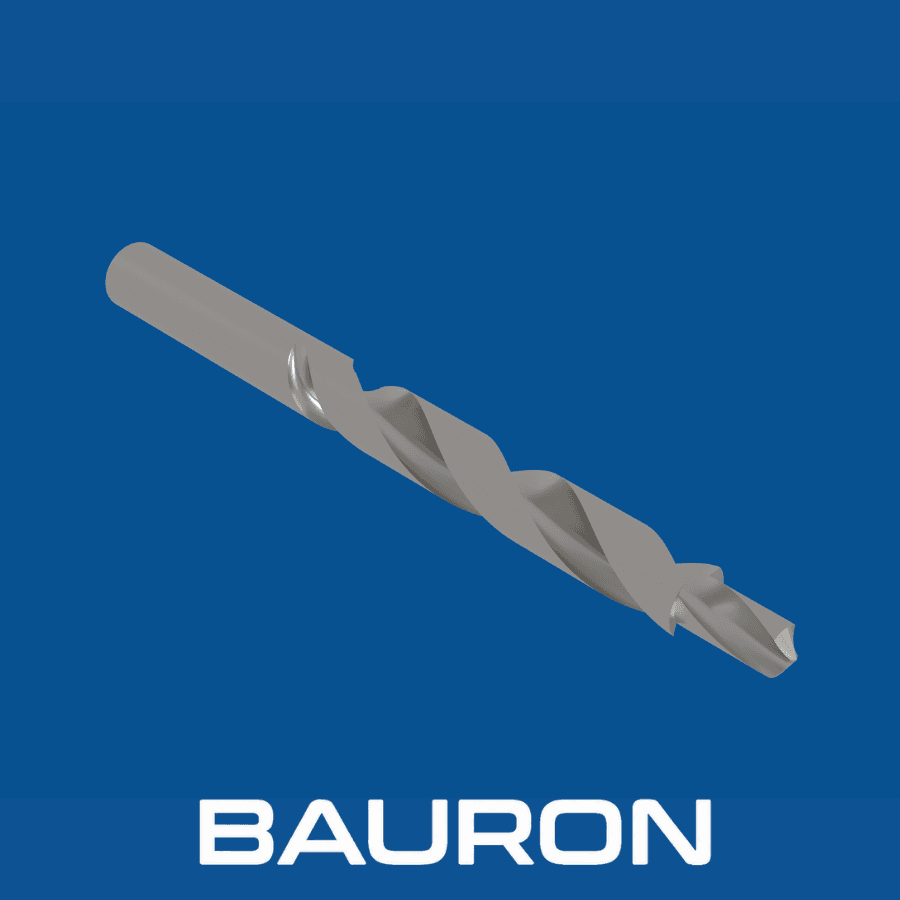
A counterbore drill is a precision cutting tool used to enlarge the top of a pre-drilled hole, creating a flat-bottomed cavity to seat fasteners flush.
View Product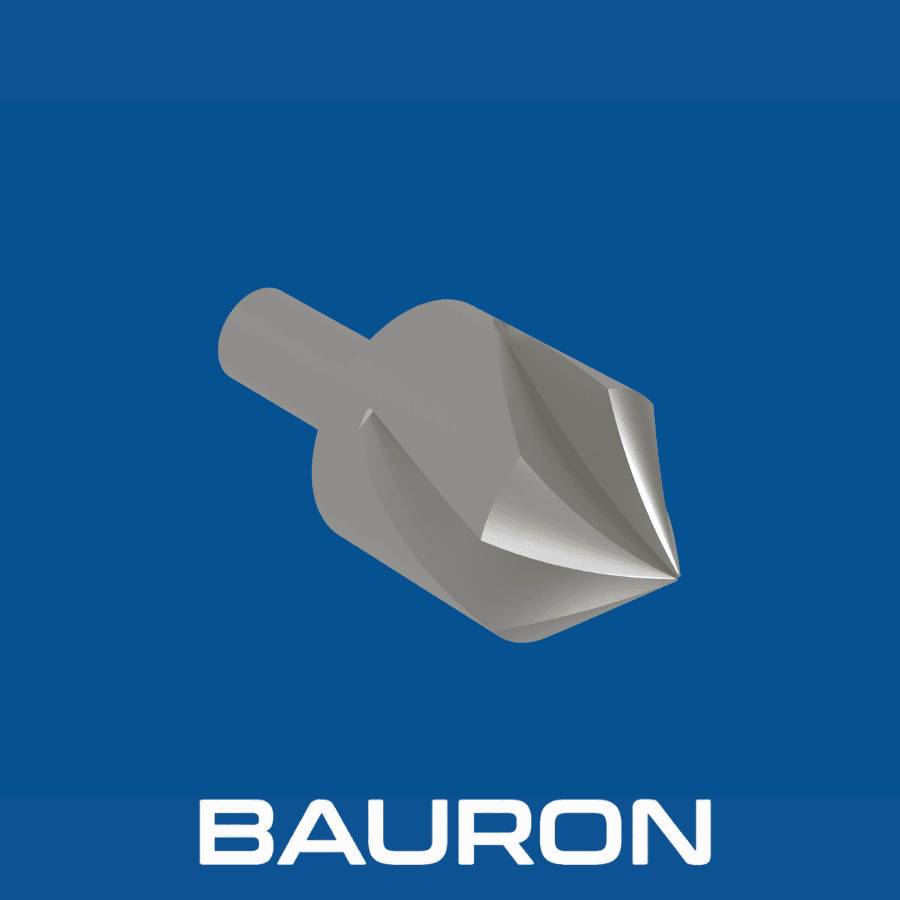
A countersink drill bit is a conical cutting tool used to create an angled recess, allowing flat-head fasteners to sit flush with a surface.
View Product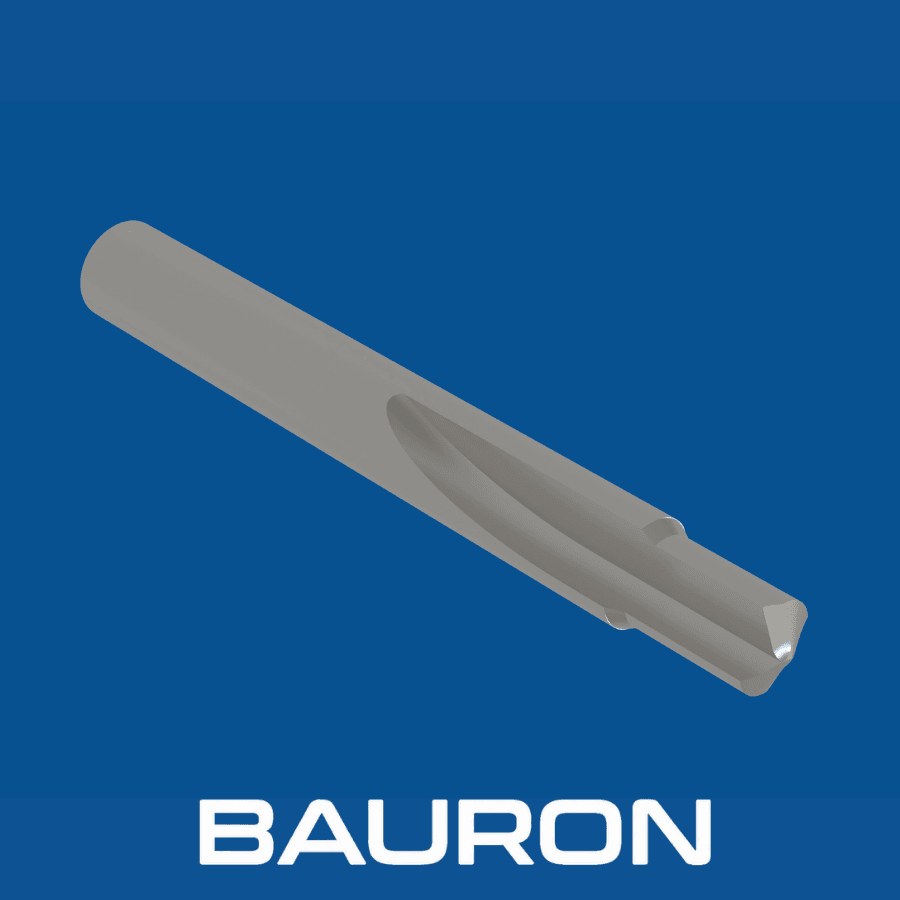
A double margin straight flute drill is a high-precision, rigid cutting tool designed to provide superior hole straightness and stability in short-chipping materials.
View ProductWork with Bauron's engineering team to develop a cutting tool tailored to your application, material and machining requirements.